The Late Start Is Not the Problem: Seven Adult Ballet Myths, Reconsidered

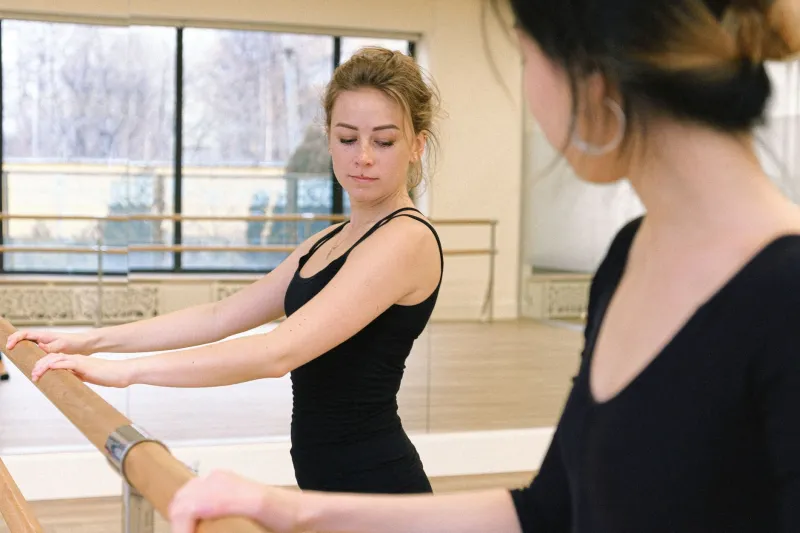
Photo: adult beginner ballet class barre students, via st.focusedcollection.com
For adults who have never taken a ballet class, the first question is often not about steps. It is about permission. Am I too old? Too stiff? Too late? At GM Ballet, faculty members hear these questions every season from adults who have carried them for years. The myths are persistent because they contain a grain of truth: ballet is demanding, and progress is not instant. But the grain has grown into a wall. Here are seven myths that teachers wish adult beginners would leave at the studio door.
Myth One: You Have to Start as a Child
Childhood training offers real advantages in turn-out, line, and the sheer number of years spent listening to ballet vocabulary. It is not the only path into the form. Adult beginners learn combinations, musicality, and coordination at a remarkable pace when they attend consistently. The standard in an adult class is not the professional stage. The standard is a clearer, stronger, more musical version of the student who walked in.
Myth Two: You Must Already Be Flexible
Flexibility is a trained quality, not an entrance exam. Beginner classes use modifications for tight hamstrings, hips, and shoulders. Teachers do not expect a first-time adult to match a nineteen-year-old conservatory student. They expect attention, patience, and a willingness to work at the edge of comfort rather than the edge of pain. Flexibility improves with consistent, intelligent practice. It is not a prerequisite for showing up.
Myth Three: Ballet Has One Body Type
Ballet has a history of narrow casting, and that history is real. It is not the whole story of who can learn and enjoy the form. Adult classes include runners, parents, teachers, retirees, and office workers in every shape. Strength, musicality, and presence matter. A student who cannot yet lift a leg to ninety degrees can still learn to move with clarity and confidence.
Myth Four: If You Cannot Remember Combinations, You Are Not Cut Out for This
Memory is a skill, not a fixed trait. Beginner teachers chunk combinations, repeat phrases, and mark steps before asking for full movement. Adults often improve quickly once they stop treating a forgotten sequence as evidence of failure. The goal is not to memorize like a professional. The goal is to build a working memory for movement, one class at a time.
Myth Five: Adult Classes Are Not Serious
Adult classes can be welcoming without being casual about technique. GM Ballet's adult program expects students to listen, apply corrections, and respect the studio. It does not demand professional hours or performance careers. Seriousness in this context means showing up on time, wearing proper shoes, and accepting that corrections are a form of attention, not criticism.
Myth Six: Pointe Is the Only Real Goal
Pointe work is one part of ballet, not its finish line. It requires years of strength, alignment, and ankle stability, and not every adult student needs or should pursue it. Many adults find deep satisfaction in center work, adagio, and the slow mastery of a turn. Teachers are happy to discuss pointe readiness, but they are equally happy to help a student build a beautiful, safe demi-pointe practice.
Myth Seven: Recitals Are for Children
Performance is part of learning. A low-stakes studio showing or adult recital gives students a reason to rehearse, a chance to manage nerves, and a memory to carry forward. It is not a competition. It is a public rehearsal of everything the class has practiced. Adults who choose to participate often discover that the audience is smaller, kinder, and more supportive than they imagined.
What Beginner Classes Actually Ask
They ask for consistency more than natural facility. They ask for listening, hydration, and proper footwear. They ask students to compare themselves to their own progress rather than to the dancer at the next barre. They ask for a certain humility, because ballet corrects everyone. And they ask for patience, because the first year is not about perfection. It is about building a language.
The late start is not the problem. The problem is the myth that says the start must be early. At GM Ballet, adults begin every season. They are not trying to become children again. They are learning a discipline that rewards attention at any age.