Ten Minutes, Every Day: The Quiet Habit That Keeps Adult Dancers in Class
The adult who walks into a beginning ballet class in America usually arrives carrying two invisible burdens: the conviction that they are too old, too stiff, or too far behind, and the quiet assumption that catching up will require heroic effort — ninety minutes of daily practice, perfect attendance, a transformation of lifestyle.
Both burdens are heavier than they need to be. And the second one, according to the teachers who work with adult beginners at GM Ballet, is the one that actually drives people out the door.
The Myth of the Marathon Session
Ask adult students why they stopped attending a previous class and the answers cluster around a familiar theme. Not injury. Not embarrassment. Something closer to collapse — a missed week that became two, a schedule disruption that broke the rhythm, a feeling that without long, devoted practice sessions, any effort was pointless.
"All-or-nothing thinking ends more dance journeys than bad knees ever will," as one GM Ballet faculty member puts it. "The student who does ten minutes at the kitchen counter every day will pass the student who does ninety minutes twice a month. Every time. It's not close."
The observation is anecdotal, but it aligns with what most dance educators intuitively know: motor learning favors frequency over duration. A plié repeated daily for a week teaches the body something that a single long session cannot, because the nervous system consolidates movement patterns between sessions, not during them.
What Ten Minutes Actually Looks Like
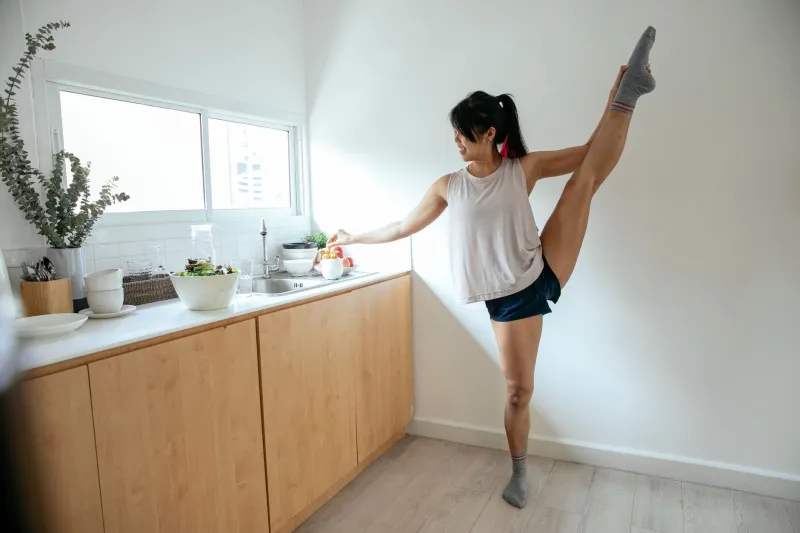
The prescription is deliberately modest. A parallel or first-position stance at the kitchen counter. Sixteen slow demi-pliés. Tendus to the front, side, and back. A few relevés while the coffee brews. Nothing that requires a mirror, a leotard, or a cleared floor.
GM Ballet's adult students describe these micro-sessions in unglamorous terms — done in work clothes, in the morning, sometimes badly. But the compounding effect is real. Foot articulation improves. Balance steadies. The vocabulary of class stops feeling foreign, so the weekly session becomes about refinement rather than translation.
One student in her forties, a nurse from a Chicago suburb, put it plainly: "I used to think if I couldn't practice properly, I shouldn't bother. Now I figure ten sloppy minutes is worth more than zero perfect ones."
The Three-Month Cliff
Studio owners across the United States know the pattern well. Adult enrollment is healthy in January and September, dips predictably around week six, and faces a cliff around month three — the point where the novelty has worn off, the soreness has normalized, and progress has become gradual enough to feel invisible.
The studios that retain adults past that cliff tend to share a habit: they lower the bar for success instead of raising it. They celebrate attendance over achievement. They explicitly tell beginners that home practice should be short, that missed classes are recoverable, that the goal is showing up in March, not impressing anyone in week one.
The alternative — an unspoken culture of intensity — quietly filters out exactly the students ballet claims to want: adults with jobs, children, and ordinary schedules who dance because they love it.
Talent Is the Wrong Question
The other myth deserves its own dismissal. Adult beginners routinely assess themselves for talent within the first month, as though a jury were deliberating. But adult ballet is not a pipeline. Nobody is scouting the Tuesday 7 p.m. class for a corps de ballet. The only relevant question is whether the practice feels sustainable, and sustainability is a function of habit design, not flexibility.
Talent, to the extent it matters at the barre, reveals itself as consistency anyway. The dancers who improve fastest are rarely the most naturally supple; they are the ones who kept a small promise to themselves every day.
A Modest Proposal
For adults considering a first ballet class: commit to ten minutes a day before committing to anything else. Do it for a month. The barre will still be there, and you will arrive with feet that already know how to listen.
For studios: say the quiet part out loud. Tell your adults that ten minutes counts. Tell them the three-month mark is where most people leave, and that staying is the entire achievement.
Ballet has always been a discipline of accumulation — eight counts at a time, season after season. It is fitting that the way in is the same as the way through: small, repeated, and unreasonably faithful.