The Invisible Duet: Inside the Pit Where Tchaikovsky Meets the Stage
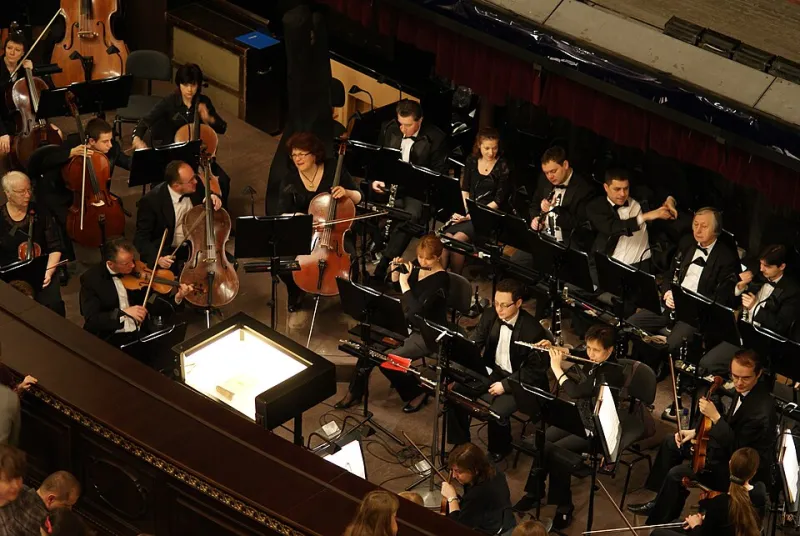
Photo: Хомелка, CC BY-SA 3.0, via Wikimedia Commons
From the orchestra level of the theater, the view is unusual: dancers' feet skimming the edge of the stage, the conductor's shoulders rising and falling, sheet music turning in near silence. For most of the audience, the pit is invisible — a warm wash of strings and a hint of brass drifting up from below. For the musicians who occupy it, it is the most demanding seat in the house.
A Score Written for the Body
Tchaikovsky composed Swan Lake with dancers in mind, but the score on the music stands tells only half the story. The other half lives in the choreography, and reconciling the two is the nightly labor of the GM Ballet Orchestra.
"A symphony can breathe," says Music Director Elena Vasquez, who has conducted for the company for eleven seasons. "A ballet score cannot. If a dancer needs two extra counts for a lift, the orchestra gives her those counts. Tchaikovsky wrote the map; the dancers choose the road."
That flexibility is written into the craft itself. Ballet conductors do not simply keep time — they watch the stage the way a chamber musician watches a quartet leader. Every tempo is a negotiation between what is written and what the human body can deliver on a given night.
Rehearsal Without the Dancers
The orchestra's week begins in a rehearsal room several floors above the stage, where the company's repétiteur demonstrates the choreography at the piano while the conductor marks tempo changes into the score. Musicians learn the ballet as a sequence of physical events: the run of harp before the Act II entrance, the breath before the Black Swan coda.
"We rehearse the steps, not just the notes," explains principal oboist Marcus Lee. "I know exactly when Odette's arms fold. My solo has to arrive the way she does — soft, a little sad, landing on the phrase."
By the time the full orchestra gathers, each player has absorbed a mental film of the ballet. When the dancers finally join for stage rehearsal, the adjustment is usually a matter of minutes, not hours — a testament to preparation the audience will never see.
The Conductor's Dilemma
Vasquez describes her role as translation. Standing in the pit with her back to the musicians and her eyes on the stage, she is the only person in the theater who can see both worlds at once.
"The principal dancers each have a different Swan Lake inside them," she says. "On Tuesday, the adagio is long and molten. On Friday, the same ballerina is recovering from a slight injury and needs more space. My job is to hear what she needs before she asks."
Small miracles of coordination happen every performance. A fermata stretches a half-second. A brass chord waits on the completion of a turn. The audience, if all goes well, notices nothing at all — only the sense that music and movement were born together.
Life in the Pit
The work is physically odd. Musicians sit in a sunken, half-lit space for three-hour performances, playing some of the most exposed solos in the orchestral repertoire. The oboe solo that opens Act II is played cold, without the gradual warm-up a concert hall allows. The celesta in The Nutcracker must be perfect on the first note of a December run that may span thirty performances.
"There is no warm audience applause to ride," Lee says. "The dancers are the ones who thank us. After a good Nutcracker, you can feel the whole company breathe with the final bar. That's our ovation."
Why It Matters
The next time the lights dim and the first low strings of a Tchaikovsky score rise from below the stage, consider the partnership unfolding in the dark. Every arabesque has been matched to a bow stroke; every leap has been caught by a cymbal. The pit and the stage are not accompaniment and spectacle. They are, in the truest sense, dancing together.