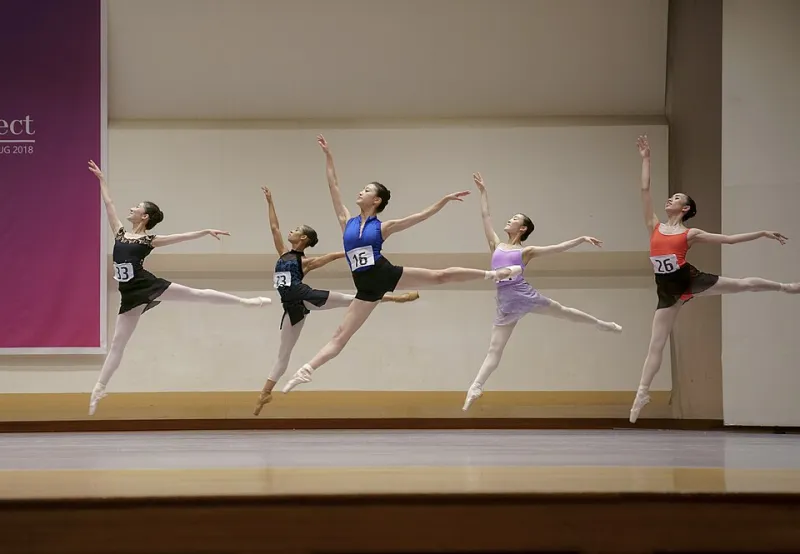
The Teacher Counts in Fives. The Pianist Answers in Fours. Welcome to the Hardest Job in the Studio.
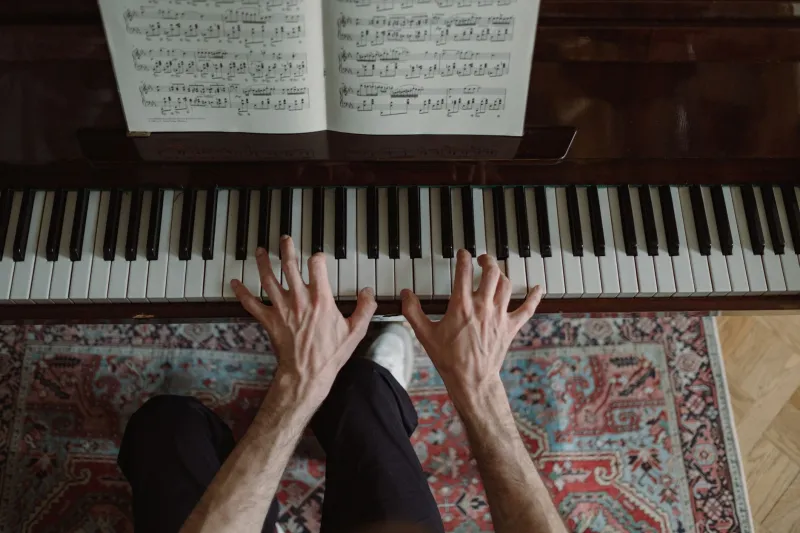
The 9 a.m. class at GM Ballet begins the way it begins every morning: with a teacher counting to five and a pianist playing in four.
If that sounds like a problem, it isn't. It's the job. Ballet class is built on an odd arithmetic — exercises counted in fives, sixes, or eights, set against music that rarely cooperates — and the person reconciling the two sits at an upright piano in the corner of the studio, sight-translating in real time, eight hours a day, for wages that would make a barista wince.
"The teacher says, 'Give me something in six, but make it feel like it's breathing,'" explains one longtime accompanist we'll call M., who has played company class across three states. "So you're not choosing a piece. You're choosing a pulse. Then you hope the pulse matches what's in their body that morning."
Eight Bars to Earn the Room
Dancers are famously exacting audiences, and they form their verdicts fast. Ask around any studio in America and you'll hear a version of the same claim: you can tell within eight bars whether the pianist is any good.
The tell isn't virtuosity. It's listening. A great accompanist watches feet the way a conductor watches bows — adjusting tempo mid-phrase when the class drags, softening under adagio so the room can breathe, sharpening the attack on petit allegro so the jumps have somewhere to land. The music doesn't accompany the exercise. The music is the exercise, and the pianist is its co-choreographer.
"A bad pianist plays for themselves," M. says. "A good one plays for the teacher. A great one plays for the dancers' bodies, and the teacher just thinks it was their idea."
The Freelance Economy of the Piano Bench
Here is what the audience never learns: most ballet accompanists are gig workers stitched into a patchwork of early mornings. A typical week might mean company class at 9, academy classes at 11 and 4, a modern session at a university across town, and a rehearsal pickup in between — four employers, four calendars, four different pianos, one of which is usually out of tune.
The pay, in much of the United States, ranges from roughly $30 to $75 per class. Few positions come with benefits. Many accompanists cobble together income from teaching, wedding gigs, church services, or accompanying voice students. And yet the bench retains a certain quiet prestige inside the dance world — a reputation earned not on stages but in studios, one morning at a time.
The training pipeline is thin, too. A handful of summer intensives and university programs now teach ballet accompanying specifically, but most pianists learn the way accompanists always have: by sitting down, getting the counts wrong, and figuring out by Wednesday what a tombé pas de bouglie actually requires of the left hand.
Translating Counts Into Sound
The core skill is improvisation-adjacent: the ability to generate appropriate music on demand. Teachers rarely request a specific piece. They request a quality — lyrical, driving, bouncy, suspended — in a specific meter and tempo. The pianist reaches into a mental repertoire of Chopin, Minkus, hymn tunes, pop arrangements, and half-remembered etudes, then reshapes whatever comes out until it fits the exercise like a glove.
"You learn to steal from everything," says another accompanist, who asked to be identified only by her first name, Elena. "A Brahms waltz slowed down becomes a plié. A hymn sped up becomes a chaîné across the floor. Nothing is sacred. Everything is material."
The improvisation is bounded by etiquette. There are unspoken rules: never stop mid-combination, never play anything so interesting the dancers start listening instead of dancing, and always, always watch the teacher's hands. The pianist who waits to be told the tempo has already lost the room.
Why It Matters
For students, live music is often the first lesson in musicality they'll ever receive — long before anyone explains phrasing, a young dancer has learned what it feels like when the melody arrives exactly where the jump does. For professionals, the accompanist is a kind of daily metronome with taste, the person who makes a 90-minute class feel less like drills and more like ritual.
"Audiences think ballet happens on stage," M. says, closing the fallboard after the last class of the day. "It happens here, at ten in the morning, to a piano that needs tuning. Everything else is just the performance of what we built."
The orchestra, it turns out, does wear leotards. It just also wears the quiet, unglamorous pride of the person on the bench — the one the counts were never quite written for, and the one who plays anyway.