The Part You Hope Not to Play: Inside the Understudy’s Daily Work
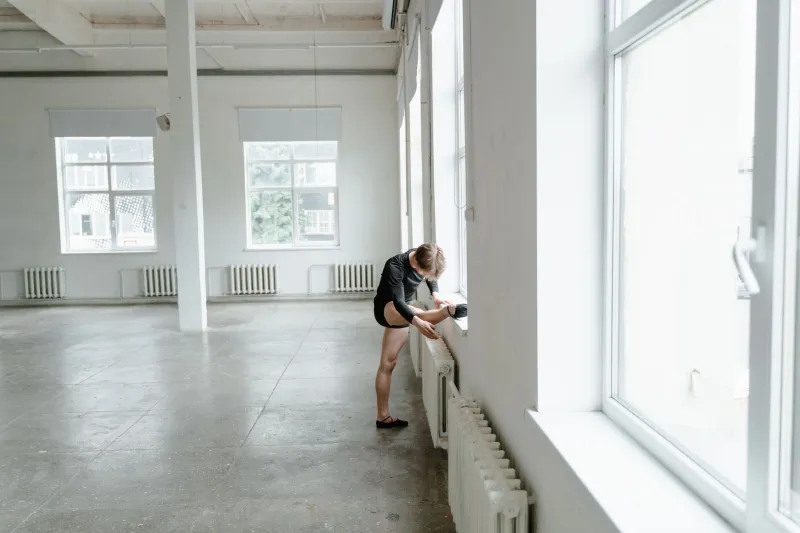
On a Tuesday morning in GM Ballet’s rehearsal studios, the first cast is running a demanding passage from the 2026 season’s opening program. In the corner, another dancer marks the same sequence in near silence. She is not injured, not resting, and not waiting for a turn in the center. She is an understudy, and her work has already begun.
Understudies occupy a peculiar place in ballet. They are essential to a company’s health, yet their labor is designed to remain unseen. When all goes well, the audience never knows their names. When something goes wrong—an injury, an illness, a sudden change in casting—they are expected to step into a role they have prepared for without the benefit of a single public performance.
A Second Cast in Plain Sight
At GM Ballet, understudies are not替补 dancers pulled in at the last minute. They are assigned early, often before the first full staging rehearsal, and their schedules are built around the needs of the production. An understudy may cover one principal role and two supporting parts, or may learn an entire track within a large ensemble work. The assignment depends on the ballet’s structure, the depth of the company, and the risks inherent in a particular season.
The dancer followed for this profile, a member of GM Ballet’s corps, asked that her name not be used because her casting for the season has not yet been announced. She has understudied before, including a supporting role in a nineteenth-century classic and a contemporary duet that demanded unusually close partnering. Her preparation for the 2026 season began months before the first audience would enter the theater.
“You learn the role as if you are going to dance it,” she said. “Then you learn to hold it without needing to be seen doing so.”
How Understudies Are Chosen
Understudy selection is rarely a matter of simple seniority. Artistic staff consider a dancer’s technical range, temperament, rehearsal discipline, and compatibility with the cast. An understudy must be able to absorb corrections quickly, because he or she may receive notes intended for another dancer and must translate them into a different body and a different interpretation.
In classical ballets, the challenge is often stamina and style. A dancer covering a principal role must understand not only the steps but the musical phrasing, the mime passages, and the subtle conventions that make a stage picture legible. In contemporary works, the demands may shift toward texture, timing, and the ability to adapt to a partner’s rhythm.
GM Ballet’s rehearsal directors also look for what one staff member described as “calm attention.” An understudy cannot afford to be passive, but neither can the dancer distract the room. The ideal candidate watches closely, asks precise questions, and retains information without requiring the production to stop.
Learning by Watching
Much of an understudy’s education happens from the wings. During run-throughs, the dancer may stand at the side of the studio, following the score and marking the entrances. In the theater, the same dancer might watch from the wings during a dress rehearsal, noting spacing, quick changes, and the placement of props.
This is not passive observation. Understudies often keep their own notation, marking counts, traffic patterns, and cues that do not appear in the choreographic score. They learn how a role feels in relation to the set, the lighting, and the orchestra. They also learn what the first cast does when something goes wrong—a skipped count, a late entrance, a prop that does not behave.
For the GM Ballet dancer, the most difficult part is memorizing a role without the repetitions that come from dancing it in performance. “In rehearsal, you get to make mistakes and fix them,” she said. “As an understudy, you have to create your own repetitions. You have to be honest with yourself about what you know and what you are guessing.”
The Costume That Waits
Costume fittings are another reminder that an understudy’s work is both real and provisional. A dancer may be fitted for a role that has no scheduled performance on the calendar. The costume is built or altered, hung in the wardrobe department, and labeled with the understudy’s name alongside the first cast member’s.
The fitting itself is practical: pointe shoes must match the demands of the choreography, headpieces must survive quick changes, and partnering costumes must allow for lifts and catches. But it is also psychological. Standing in a costume for a part you may never dance can feel like preparing for a trip that may never be taken. Understudies learn to treat the preparation as its own form of performance—a professional obligation rather than a promise.
The Psychology of Readiness
Understudies must manage a particular kind of anticipation. They are asked to be ready without being anxious, focused without being possessive. If they hope too visibly for a chance to perform, they can seem to be wishing ill on a colleague. If they detach too completely, they risk being unprepared when the call comes.
The GM Ballet dancer describes the balance as “quiet alertness.” She checks the company schedule each morning, keeps her shoes and makeup kit in order, and reviews her notes before rehearsals even when her role is not on the day’s agenda. She has learned not to interpret a lack of performance as a lack of value.
“The work is not less because no one sees it,” she said. “The company is asking me to be responsible for something important. That responsibility does not disappear just because the curtain goes up with someone else in the role.”
Why the Company Depends on Them
For GM Ballet, understudies are a form of institutional insurance. A season can be disrupted by a single injury, and a production can lose momentum if a cast change feels unrehearsed. Understudies allow a company to protect both its artists and its audiences. They make it possible for a performance to continue with dignity rather than improvisation.
Their work is also a reminder of how ballet actually functions. The art form depends on repetition, preparation, and collective discipline—not only on the dancers who receive the applause. The understudy’s oath is not a dramatic promise made on stage. It is a daily practice: learn the role, keep the body ready, watch closely, and wait.
When the 2026 season opens, the audience will see the first cast. In the wings, in the studio, and in the wardrobe department, the second cast will be ready. That readiness is not a footnote to the performance. It is part of the performance’s foundation.