Four Rivers, One Stage: Tracing the Lineages That Shape Every American Dancer
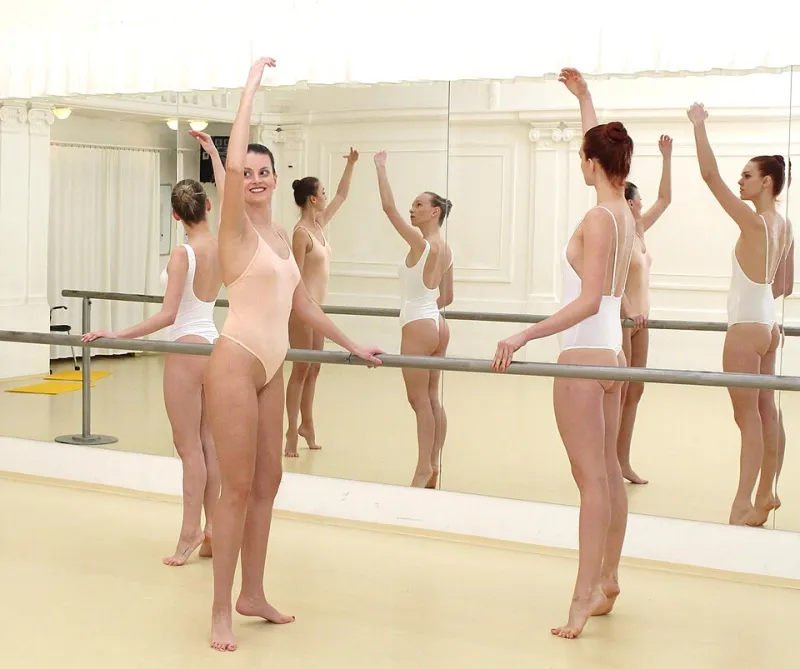
Photo: Helgam, CC BY-SA 4.0, via Wikimedia Commons
Ask a ballet dancer where they trained and you will often hear a country named before a city. Paris. St. Petersburg. Havana. New York. These aren't just biographical details—they are pedagogical fingerprints, visible in the way a dancer jumps, turns, and breathes. American audiences watch the descendants of four great teaching traditions share the same stage every night, often within the same corps de ballet. It's worth understanding what each brings, because it changes how you see the performance.
The French School: The Grammar Book
Every dancer, whatever their lineage, speaks the language of the French school. The vocabulary—plié, tombé, chaîné—and the codified precision of the Paris Opera's tradition remain the foundation of classical training worldwide. The French emphasis is on clarity, elegance, and an almost architectural cleanliness of line. Nothing is ornamental; everything is exact.
Dancers formed in this tradition tend to be immaculate technicians with a certain understated refinement—their virtuosity is in what they don't show.
Vaganova: The Russian Architecture
The Vaganova method, developed by Agrippina Vaganova in Soviet Leningrad, is famous for the way it builds a dancer from the center outward. Its signature is the coordinated use of the whole body—arms, back, and head moving as one instrument—producing the soaring, dramatic quality audiences associate with Russian classical ballet. The grand jeté that seems to hang in the air a beat too long? That's Vaganova's epaulement and placement at work.
The Cuban School: Fire and Elevation
Less widely known in the US than it deserves to be, the Cuban school—forged by Alicia Alonso and Ballet Nacional de Cuba—combines Russian-derived rigor with an extraordinary emphasis on turns, jumps, and passionate musicality. Cuban-trained dancers are routinely among the most explosive technicians on any stage, and their influence on companies from Miami to San Francisco is now undeniable.
Balanchine: The American Accent
When George Balanchine arrived in the United States and co-founded the School of American Ballet, he did something radical: he sped everything up. Balanchine's dancers move faster, extend further, and treat the music with an almost athletic directness. His legacy is the closest thing ballet has to a native American style—kinetic, musical, and unafraid of simplicity.
Three Dancers, Three Rivers
The members of GM Ballet's company embody this convergence. Principal dancer Marisol Herrera, trained in Havana before joining a US company, describes her Cuban foundation as 'a gift and a debt'—the gift being elevation and attack, the debt being years of learning to soften the attack for roles that ask for stillness. 'When I dance Giselle's mad scene,' she says, 'the Cuban training gave me the power. The American repertoire taught me what to do with it.'
Corps dancer Thomas Beck, a product of a Balanchine-influenced American conservatory, talks about speed as a first language: 'I learned to move fast before I learned to move slow. Dancing classical repertoire with Russian-trained guest artists taught me patience—savoring a fondu instead of rushing through it.'
Soloist Anna Petrova, who came through a Vaganova-based academy in the Northeast, sees the blending as inevitable: 'My generation doesn't think of styles as borders. We steal what works. That is the American way.'
So What Is the American Style?
If there is an answer forming, it may be this: the American style is synthesis. The United States has no state ballet academy, no single codified method. Instead, dancers arrive from every tradition, train side by side, and absorb one another's strengths. The result, visible on our stage this season, is a dancer who can deliver Vaganova's breadth, Cuban fire, French clarity, and Balanchine speed—sometimes within a single variation.
Purists may lament the blurring of schools. We'd argue the opposite: the cross-pollination happening in American companies today is producing the most versatile generation of dancers in ballet's history. Come see for yourself. Watch the corps breathe together, watch a soloist launch a jump with Havana behind it and land it with New York in front of it.
Four rivers, one stage. The current runs forward.