Twenty Hours on Stage, a Lifetime in a Closet: The Secret Life of a Pair of Pointe Shoes
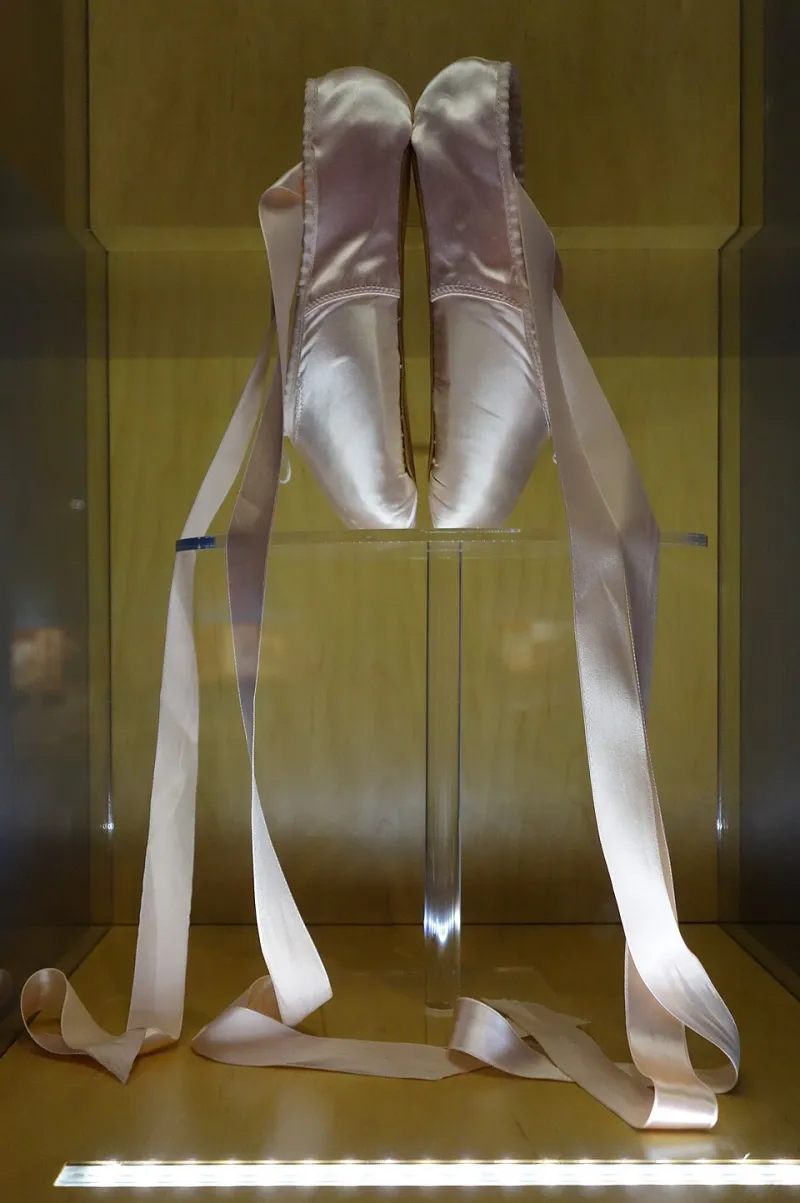
Photo: Daderot, CC0, via Wikimedia Commons
The box arrives plain and unassuming — pink cardboard, no fanfare, tucked into a shipment from a cobbler in upstate New York. Inside, a pair of pointe shoes that will, if all goes well, survive roughly twenty hours of dancing before they're done.
"People are always shocked when I tell them that," says Marguerite Doyle, GM Ballet's wardrobe and shoe manager, holding the shipment in her arms. "A professional dancer can go through a pair in a single performance of The Nutcracker. A principal might burn through sixty or seventy pairs in a season."
Breaking Them In, Breaking Them Down
The paradox of pointe shoes is that dancers spend years learning to love them, then spend their careers destroying them. New shoes are famously rigid — the box, a hardened pouch of glue, fabric, and cardboard at the toe, must be softened before it can hold a dancer safely.
Corps dancer Elena Vasquez walks us through her ritual in the studio hallway: darning the tip of the platform by hand, cutting the shank to just the right flexibility, sewing the elastic herself, then bending the shoe against the barre until the arch gives. "You're customizing a mass-produced object," she says. "No two dancers break in a pair the same way. My shoes wouldn't fit anyone else in the company, and theirs wouldn't work for me."
The glue that stiffens the box is also the shoe's undoing. Every grand jeté, every hour in rehearsal, every humid summer studio session breaks down the adhesive. When the box goes soft, the shoe is finished — not worn out in the way a sneaker wears out, but structurally dead.
What the Shoes Keep
Look closely at a retired pair and you can read a career. Scuffed platforms mark turns taken. A darkened, sweat-stained lining records hours of labor. A shank cracked at a particular angle tells you how a dancer lands her jumps.
"I can tell who a pair belongs to across the room," Doyle laughs. "The way the ribbons are sewn, where the wear concentrates. It's like handwriting."
That legibility is part of why retired shoes so rarely make it to the trash. Vasquez keeps her most meaningful pairs — the ones from her debut as Sugar Plum Fairy, the ones from her first professional contract — wrapped in tissue in her closet in Philadelphia. Others get signed and sold at company fundraisers, where a well-worn shoe from a beloved principal can fetch a few hundred dollars for the studio scholarship fund.
The Real Cost of the Art Form
For audiences, the economics come as a surprise. At roughly eighty to one hundred dollars a pair, and with shoes dying after a handful of wears, a dancer's footwear budget can rival a car payment. Most professional companies subsidize shoes for their dancers; students, however, typically pay out of pocket, which is why GM Ballet's beginner classes include a frank conversation about the true cost of going en pointe — and why we insist no student attempt it before their feet and ankles are ready.
"The shoes are a lesson in what ballet actually asks of you," says Vasquez. "You give them everything for twenty hours, and then you let them go."
A Keepsake That Outlives the Performance
There's a strange sentimentality to it all: objects built for a few performances that end up lasting decades in closets, shadow boxes, and display cases. A retired pointe shoe doesn't look like much to the untrained eye. But to the dancer who wore it, it holds a role, a season, a night the audience will remember and she will never forget.
"Every pair tells you exactly who I was when I wore it," Vasquez says, lacing up a fresh pair for evening class. "I just hope whoever finds them someday thinks they were worth it."
They were.